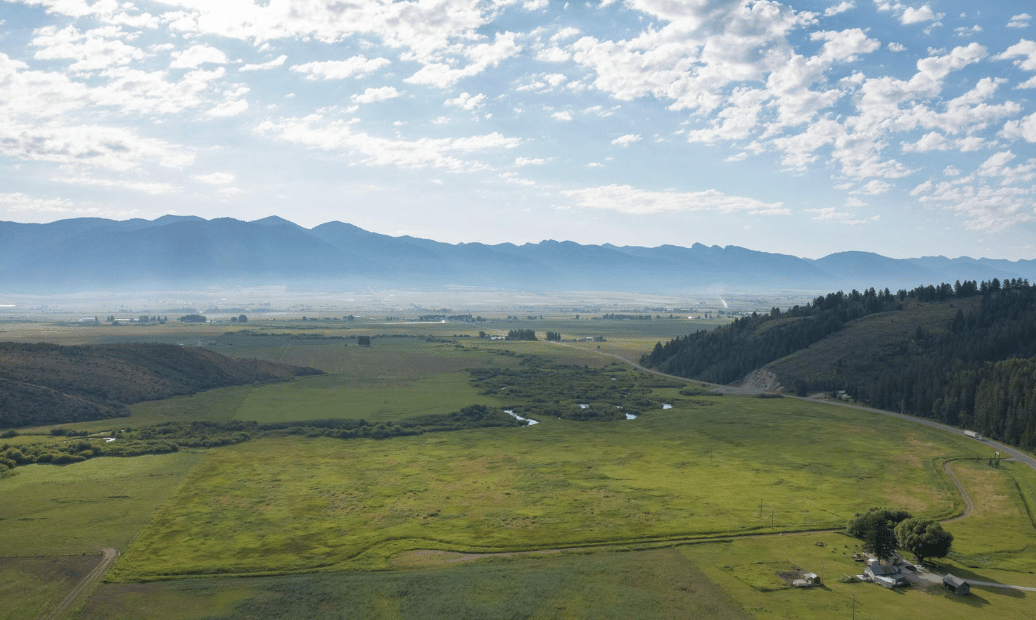
Is pricing your Etna view lot harder than you expected? You are not alone. View is powerful, but it is also nuanced, and small site details can shift value by a wide margin. In this guide, you will learn a clear, practical process to evaluate your view, select the right comparables, and reconcile a credible price band tailored to the Alpine and Etna area of Lincoln County. Let’s dive in.
Start with highest and best use
Pricing starts with clarity about how a buyer will likely use the parcel. Confirm buildability and the most probable use, such as a single-family home, second home, or vacation rental. This frames the buyer pool and the level of view premium the market may support.
Consider market demand in the immediate submarket, not a distant resort market with different buyer behavior. In Star Valley and the Alpine–Etna corridor, your buyer might prioritize panoramic mountain lines, water adjacency if present, or a private valley outlook. Always test the permanence of the view. If future development could block the outlook, the premium will be lower than a protected ridgeline or year-round water view.
What drives value on Etna view lots
View quality and field of view
Not all views are equal. A panoramic mountain or valley outlook typically carries more value than a narrow or framed view. Water and dramatic mountain ridgelines usually trade at a higher premium than distant skylines. Document your field of view with photos from the likely building envelope and note compass bearings.
Orientation and solar aspect
Southern and southwest exposures are often preferred in northern climates for sun and passive solar benefits. Orientation affects livability, snowmelt on driveways and decks, and how comfortable outdoor spaces feel. Poor orientation can modestly reduce value even when the view is strong.
Elevation and prominence
Lots on a knoll or gentle rise that provide an unobstructed outlook tend to command stronger premiums than lower parcels with partial visibility. The elevation advantage should also be buildable. If a dramatic perch requires very costly foundation or retaining work, the premium may narrow after site costs.
Permanence and seasonal visibility
Year-round, unobstructed views hold more value than vistas that fade with seasonal foliage, haze, or snow. Study nearby parcels, tree age, and likely growth to understand how the view might change over time.
Buildability and slope
Steep slopes reduce usable area and raise foundation and retaining costs. Soil and rock conditions can influence septic feasibility and excavation costs. Drainage, erosion, and debris-flow risk can limit insurability or require mitigation, which affects marketability and price.
Access and driveway feasibility
Access issues reduce your buyer pool. Consider the grade, switchbacks, sight lines, culvert needs, and legal access. An attractive view can be offset by a difficult driveway that increases cost or creates winter access challenges.
Utilities and services
Confirm the path and cost for water, septic, power, and communications. Rural parcels often require a drilled well and engineered septic, and extended power runs can be costly. Reliable broadband and winter fuel delivery access matter to year-round and remote workers. Distance to services and highway access to Jackson or Afton can also shape demand.
Legal and regulatory checks
Review zoning, permitted uses, building setbacks, and any design review. Document easements, rights-of-way, and view or conservation easements that either protect or limit views. Check floodplain or wetland designations on the FEMA flood maps. In forested areas, understand wildfire risk and defensible space requirements.
A simple view rubric you can use
Use a consistent rubric to describe your parcel and comps. It keeps comparisons disciplined and helps you justify a premium.
- None or minimal: No meaningful view or only a glimpse. Little to no premium.
- Partial: A defined focal point, but obstructed sides or seasonal limitations. Modest premium.
- Expanded: Wide-angle valley or mountain line with clear focal points and good orientation. Meaningful premium.
- Panoramic or exclusive: Unobstructed, sweeping mountain or water view with strong permanence. Highest premium.
Add notes on orientation, elevation, and permanence. Attach photos and compass bearings from the likely building pad.
Choose the right comps
What to compare first
Prioritize recent vacant land sales in the same Alpine–Etna submarket where the buyer profile matches yours. If vacant land sales are limited, extract land value from improved sales using an allocation method. Control for lot size, slope, buildability, orientation, access, utilities, and especially view quality.
How to treat view in adjustments
Rank each comp using your view rubric. If you find matched pairs where the main difference is the view, that is the strongest way to estimate a view premium. If matched pairs are scarce, apply multiple comp adjustments and reconcile with judgment based on the local market.
Common adjustment types
- View quality: Often the largest subjective adjustment. Use paired evidence where possible.
- Orientation and solar: Modest adjustments for northern vs. southern exposure when it affects livability.
- Elevation and prominence: Positive adjustments when elevation materially improves the view and is buildable.
- Access and driveway: Dollar adjustments for added costs or marketability impacts.
- Utilities: Dollar adjustments for distance to power, need for transformers, and trenching costs.
- Slope and buildability: Dollar adjustments tied to grading, retaining, and foundation complexity.
When possible, show both percentage adjustments for qualitative items and dollar adjustments for hard costs, then reconcile to a final price band.
When comps are thin: alternate checks
Allocation method
Use nearby improved sales. Allocate total sale price between land and improvements to infer the land value. Compare allocated values across similar properties to understand the view premium.
Builder residual approach
Builders back into land value from the expected finished home price. They subtract hard and soft costs, access and utility infrastructure, profit, and carrying costs. In a strong market, the residual can exceed a simple sales comparison estimate. In a softer market, it may be lower than what a retail buyer would pay. If your likely buyer is a builder, this method is essential.
Paired-sale analysis
Matched pairs of nearly identical lots with different views are rare but powerful. When you have them, they offer the clearest read on the view premium.
Hedonic regression
This advanced statistical method quantifies how attributes like view, acres, and elevation affect price across many sales. It is not typically needed for a single listing, but it can support a broader market study.
Step-by-step pricing process for Etna
- Initial intake
- Gather parcel ID, legal description, recorded plat, and your goals. Decide if you want a quick sale, maximum price, or to sell raw vs. with entitlements.
- Desktop research
- Pull county assessor and GIS parcel maps. Note parcel boundaries and recorded easements.
- Compile recent sales from MLS and deed records, ideally 12 to 24 months with priority on recency if conditions are changing.
- Check the FEMA National Flood Hazard Layer for flood zones or wetlands.
- Review topography and aerials to assess slope and likely building envelopes.
- Confirm utility maps and well and septic feasibility through public records.
- Site visit
- Photograph views from the likely building envelope, including compass bearings and sightlines to potential obstructions.
- Verify access grade, any culvert requirements, and winter access feasibility.
- Note the distance to power and communications and whether trenching or transformers will be required.
- Comp analysis and adjustments
- Apply your view rubric consistently across the subject and comps.
- Adjust for view quality, orientation, elevation, access, utilities, and slope using paired evidence and cost estimates where possible.
- If a builder buyer is likely, run a residual analysis using current construction economics and achievable finished-home prices.
- Reconcile a price band
- Present value as a band, not a single number. Define low, likely, and high scenarios and state the assumptions. Note what would move the lot into a different band, such as completed driveway work or confirmed well capacity.
- Decide on list strategy
- If the market is moving, weigh the timing. In some conditions, pre-list improvements like driveway rough-in or utility stubs can reduce buyer uncertainty and widen the buyer pool.
Should you improve before listing?
Improving a lot can reduce uncertainty and speed decisions. A roughed-in driveway, staked building envelope, or utility letters can help buyers and builders price risk. That said, not every dollar returns a dollar in price. Heavy site work is often valued at a discount by buyers who prefer their own contractors and specs. If you are considering improvements, target items that clarify buildability and reduce big unknowns, such as well feasibility, septic perc testing, and a basic access plan.
What a data-backed valuation consult includes
A concise, credible valuation consult helps you market with confidence. The most useful package typically includes:
- Site sketch showing likely building envelope and primary view bearings.
- Photo log with captions and compass bearings from the building area.
- Map of 3 to 5 comparable sales and a summary grid with adjustments.
- Estimated price band with rationale and sensitivity to key risks like access cost or utility distance.
- Recommended next steps, such as ordering a perc test, confirming well feasibility, and obtaining contractor estimates for driveway and trenching.
This level of documentation makes your view premium understandable and defensible to both retail buyers and builders.
FAQs
How much does a view add to an Etna lot?
- It varies widely by field of view, permanence, orientation, and buildability; use a rubric and local paired-sale evidence to narrow the premium.
Will a partial view sell for much less than a panoramic view in Alpine–Etna?
- Yes, wide and unobstructed views tend to command the strongest premiums, while partial or seasonally limited views trade at modest premiums.
Should I list my Etna lot raw or add a driveway and utility stubs first?
- Improvements that reduce uncertainty can help, but heavy site work does not always return dollar for dollar; target feasibility and access clarity.
How do builders price a view lot differently from retail buyers?
- Builders use a residual method, backing land value out of the expected finished home price after subtracting construction costs, profit, and carrying costs.
What permits or checks should I order before listing a view lot?
- Consider a perc test, a topographic or survey sketch, utility confirmation letters, and a floodplain check on the FEMA maps.
What is a view or scenic easement and how does it affect value?
- An easement can either protect views for the parcel or restrict building placement; the effect depends on the recorded terms and site context.
Ready to price with confidence? For a private, data-backed consult tailored to your Etna or Alpine parcel, connect with the senior-led team at DeMello & Co..